WordPress Plugin Vulnerability Statistics 2026: 43,231 Vulnerabilities, 10,569 Never Fixed

43,231 vulnerabilities have been published for 16,558 WordPress plugins, and 10,569 of them (24.4%) have no fixed version. 11,355 were published in the last 12 months alone. The records go back to 3 October 2005 and come from Wordfence’s public vulnerability database.
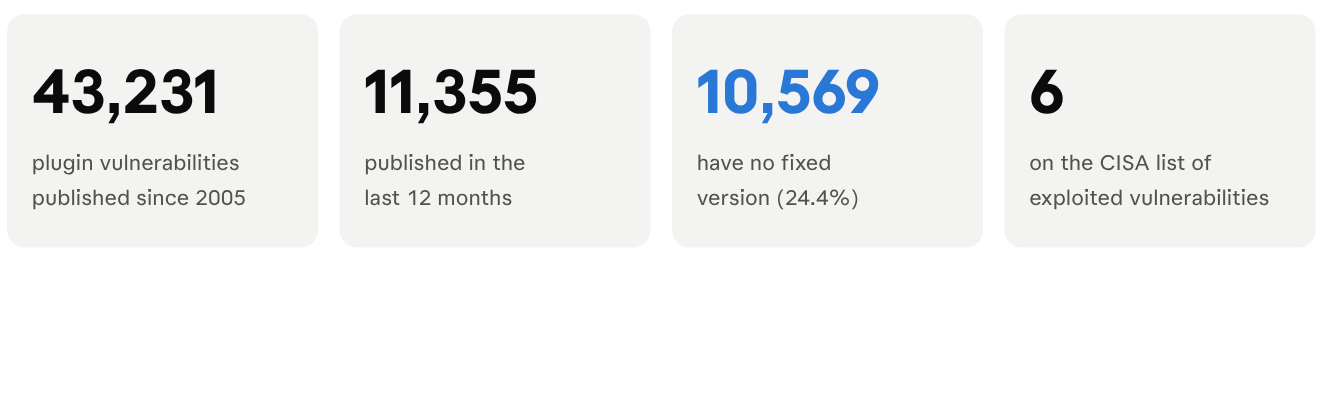
Share this: 1 in 4 known WordPress plugin vulnerabilities has never been fixed: 10,569 of 43,231. (PluginCanary, November 2026)
Unfixed vulnerabilities in popular plugins
Most unfixed vulnerabilities sit in small or abandoned plugins, but not all. 259 unfixed vulnerabilities affect 213 plugins with 1,000+ active installs. If one of those is on your site, there is no update that closes the hole: the only fix is to remove or replace the plugin.
Share this: 213 WordPress plugins with 1,000+ installs have a known vulnerability with no fix available. (PluginCanary, November 2026)
WooCommerce plugins at a glance
| All WordPress plugins | WooCommerce plugins | |
|---|---|---|
| Vulnerability records | 43,231 | 4,000 |
| Plugins affected | 16,558 | 1,304 |
| No fixed version | 10,569 (24.4%) | 196 (4.9%) |
| Unfixed, on plugins with 1,000+ installs | 259 on 213 plugins | 24 on 18 plugins |
WooCommerce plugins get their vulnerabilities fixed far more often: only 4.9% of their records have no fixed version, against 24.4% across all plugins. None of them is on the CISA list of exploited vulnerabilities.
Exploited and repeated
- 6 WordPress plugin vulnerabilities are on the US government’s CISA Known Exploited Vulnerabilities list, meaning attackers have used them in real attacks.
- 1,488 plugins have had repeated security issues and are still listed on WordPress.org.
- Security problems also drive closures: WordPress.org closed 1,985 plugins for security issues in 2024. See Why WordPress.org Closes Plugins.
What store owners should do
- Keep plugins updated. Most vulnerabilities do have a fix; it only helps once installed.
- Check your plugins against Wordfence Intelligence or Patchstack a few times a year.
- Remove any plugin with an open vulnerability and no fixed version.
- Remove plugins you no longer use. Deactivated plugins can still be a risk if their files stay on the server.
See the WooBeWoo plugins for actively maintained WooCommerce extensions.
How we counted
Vulnerability records are from Wordfence’s public database, matched to WordPress.org plugins by PluginCanary. Snapshot 16 November 2026; the 12-month count and the repeated-issues count are from 10 November 2026. "No fixed version" means the record lists no release that resolves it. A WooCommerce plugin is one that declares WooCommerce as a required plugin, declares a WooCommerce version in its code headers, or carries the woocommerce tag.


